Today, energy independence is not just a trend, but a critically important component of a stable business. At ETL Group, we design and build solar power plants every day, and we know from experience that without a high-quality energy storage system (ESS), your solar power plant will only operate at 50% of its potential.
The battery is the heart of your power system.
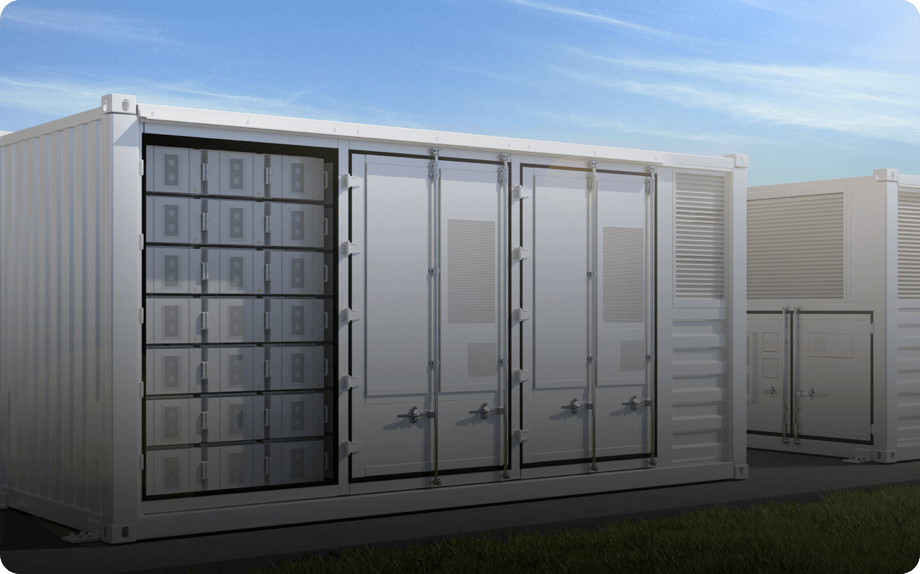
A solar panel generates energy only during the day, and business consumption peaks are often shifted to the evening or morning. A battery for a solar power plant allows you to store excess energy generated during the day and use it when you need it, not the sun. This is the basis of ENERGY ARBITRATION - a strategy that allows you to significantly reduce electricity bills and ensure autonomy during network failures.
Types of storage devices: what to choose?
The market for industrial solutions for solar power plants is currently dominated by two types of technologies:
1. Lithium-iron-phosphate batteries (LiFePO4) - the "gold standard"
This is the most popular choice for business solutions for enterprises that plan daily intensive operation of the system. They have high energy density, safety (do not burn out), and a service life of up to 6000-8000 charge/discharge cycles.
2. Lead-acid batteries (AGM, GEL) - an outdated solution
Although they are cheaper at the purchase stage, they have low efficiency and short service life. We do not recommend them for serious business projects, since their total cost of ownership (TCO) in the long term is much higher due to the need for frequent replacement.
How to choose a battery capacity?
An error in calculating the capacity can cost a business production shutdown. When choosing batteries, we always consider three factors:
-
Daily consumption schedule - how many kWh does the facility consume during critical hours?
-
Depth of discharge (DoD) - not all batteries can be discharged to zero. For LiFePO4, it is optimal to use up to 80–90% of the capacity, which preserves their resource.
-
Required autonomy - how many hours or days of operation without a network should the reserve be calculated for?
Service life and reliability
When you invest in a storage system, you should look at the LCOE (Levelized Cost of Energy) - this is the cost of one kilowatt-hour over the entire life of the battery. A quality LiFePO4 battery from a proven manufacturer will last you 10 to 15 years with daily cycling. Integration with a smart energy management system (EMS) allows you to automatically control the temperature and balance the cells, which critically extends the life of the battery.
Practical tips
Scalability
Choose modular systems. Your business grows, and your energy needs may increase. The modular architecture allows you to add new units without replacing the inverter or the entire system.
Integration with the inverter
The battery should ideally "communicate" with the inverter via communication protocols (CAN/RS485). We select equipment that works as a single, coordinated mechanism.
Service
Always choose a supplier that provides warranty service. Storage technologies are complex, and high-quality service support guarantees your safety.
Investing in energy independence
Choosing a battery for a solar station is not about buying equipment, but about creating an asset that protects your profit from tariff fluctuations and network failures. The experience of previous winters has shown businesses that have become our clients: having your own generation and storage system is the foundation of sustainability that pays off faster than it seems at first glance.